
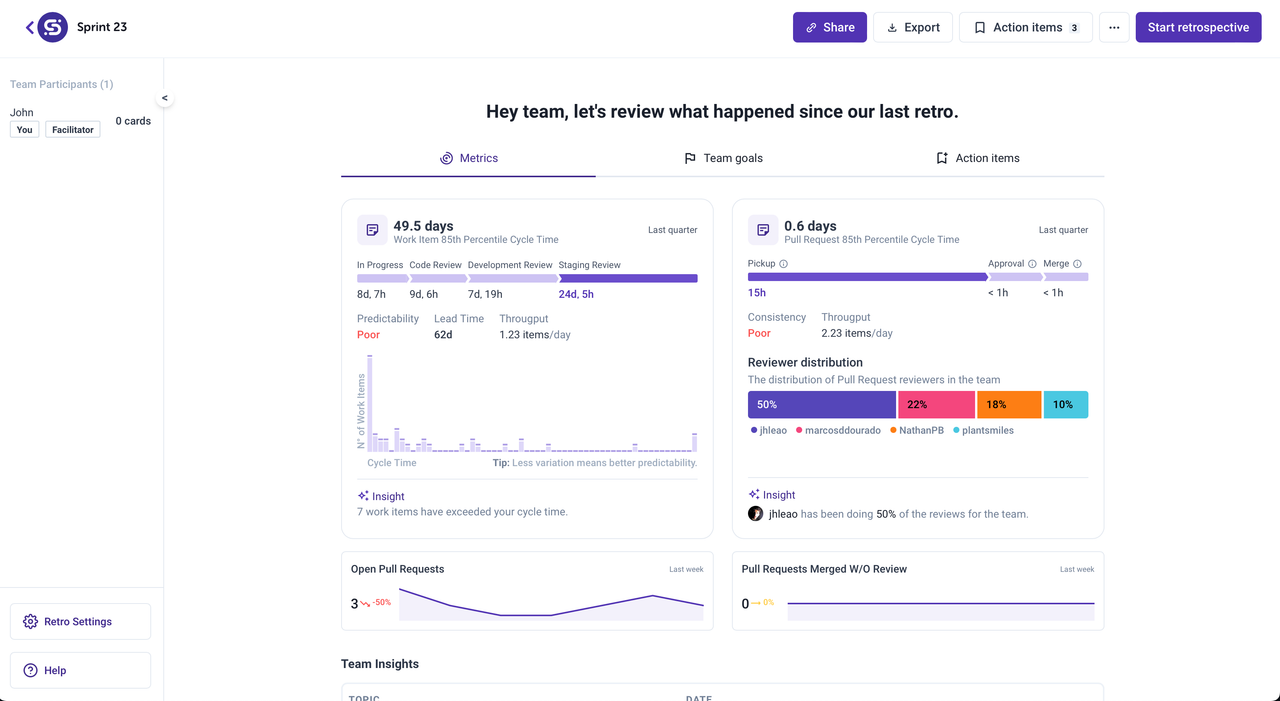
In the world of software development, retrospectives play a crucial role in fostering team growth and continuous improvement. By incorporating engineering metrics into your retrospectives, you can take your software development process to new heights. In this blog post, we will explore the benefits of integrating metrics into retrospectives and share best practices for making data-driven decisions that boost productivity and collaboration.
Why Engineering Metrics Matter in Retrospectives
Retrospectives are an essential Agile practice that provides software teams with a structured way to reflect on their performance and identify areas for improvement. While qualitative feedback is invaluable, adding quantitative engineering metrics to the mix can paint a clearer picture of your team’s performance and ensure more effective decision-making. Here’s why engineering metrics matter in retrospectives:
- Objective Data for Informed Decisions: Engineering metrics offer an objective view of your team’s performance, enabling more accurate identification of bottlenecks and inefficiencies.
- Increased Accountability: Metrics make it easier for team members to take ownership of their performance and actively engage in improvement efforts.
- More Collaboration: Sharing metrics within the team fosters a culture of transparency, encouraging open discussion and collaboration.
- Streamlined Focus: Metrics help your team prioritize their efforts and concentrate on the most impactful areas for improvement.
Incorporating Engineering Metrics into Retrospectives: Best Practices
Now that you understand the value of engineering metrics in retrospectives, here are some best practices for integrating them into your process:
- Select Relevant Metrics: Choose the engineering metrics most relevant to your team’s goals and objectives. Common examples include cycle time, lead time, deployment frequency, and error rates.
- Visualize Data: Present your metrics in a visually engaging manner to make them easily understandable and actionable. Consider using charts, graphs, or dashboards to display your data.
- Establish a Baseline: Before diving into the data, establish a baseline for each metric to help your team understand their current performance and track improvements over time.
- Facilitate Data-Driven Discussions: Encourage team members to discuss the metrics and insights in the context of their experiences and perspectives. Use the data as a starting point for identifying areas for improvement and creating action plans.
- Track Progress: Continuously monitor your team’s progress by tracking the impact of implemented improvements on the selected metrics. Adjust your action plans as needed to ensure ongoing development process optimization.
Conclusion
By incorporating engineering metrics into your retrospectives, you can foster a data-driven culture. The combination of quantitative and qualitative data empowers teams to make informed decisions, boost productivity, and enhance collaboration. Start integrating engineering metrics into your retrospectives today and experience the transformative effects on your team’s performance and growth.